

If you’ve been researching geothermal heating and cooling, you’ve probably noticed one thing pretty quickly: the terminology can feel overwhelming. Closed loops, COPs, vertical bores… it’s a lot, especially if you’re just trying to figure out whether geothermal is right for your home or building.
As a geothermal installation company, our job isn’t just to drill holes and connect pipes—it’s to help you understand what you’re investing in. Below, we break down the most common geothermal heat pump terms in straightforward language, the way we explain them on job sites every day.
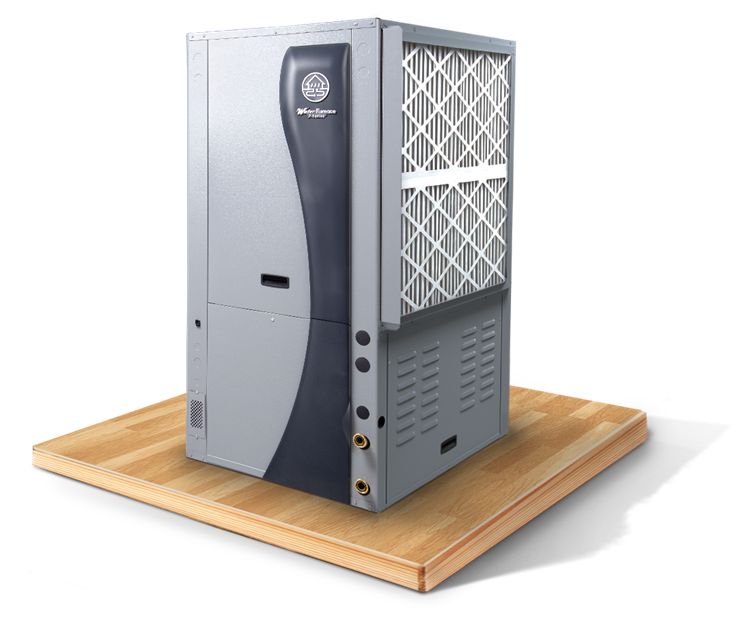
Geothermal Heat Pump (GHP) or Ground Source Heat Pump (GSHP)
A geothermal heat pump or Ground Source Heat Pump is the system that heats and cools your building by using the stable temperature of the earth.
Instead of creating heat (like a furnace) or dumping heat into hot outdoor air (like a conventional AC), a geothermal heat pump moves heat between your building and the ground. This makes it incredibly efficient, reliable, and long-lasting.
Ground Loop (or Earth Loop)
The ground loop is the network of pipes buried in the ground that exchanges heat with the earth. These pipes are filled with a water-based solution that circulates continuously.
Think of the ground loop as the system’s connection to the earth, quietly doing the hard work for decades.

Closed Loop System
A closed loop system means the same fluid stays inside the loop at all times and is never exposed to the outside environment.
This is the most common type of geothermal system we install because it’s:
- Highly durable
- Low maintenance
- Environmentally safe
Closed loops can be installed in several configurations, depending on your property. Learn more about the types of loopfields here: https://aces-energy.com/2024/06/28/open-loop-vs-closed-loop-geothermal/
Open Loop System
An open loop system uses groundwater directly from a well or body of water, then discharges it after heat exchange.
These systems can be very efficient, but they’re only suitable in specific conditions and often require additional permitting and water quality considerations. That’s why closed loops are more common for residential projects.
Vertical Loop
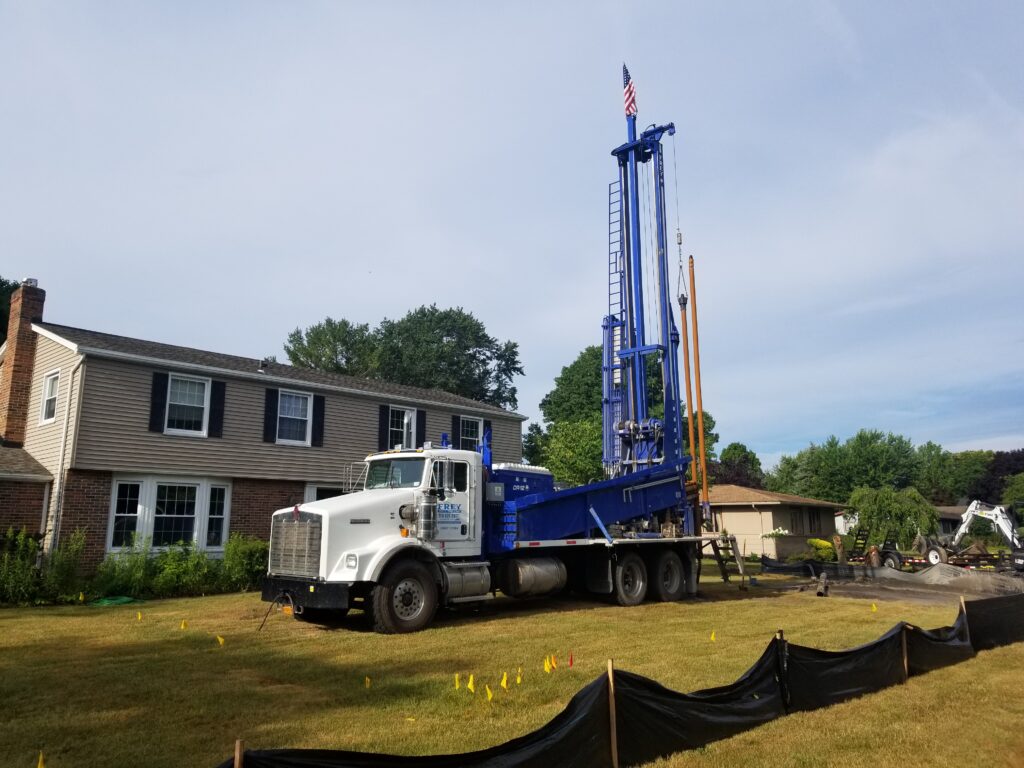
A vertical loop is installed in deep boreholes, typically 150–400 feet straight down.
We usually recommend vertical loops when:
- Land space is limited
- Soil conditions are favorable
- Disturbance to the landscape needs to be minimized
You might only see a few small drill locations—but beneath the surface is a powerful energy system.
Horizontal Loop
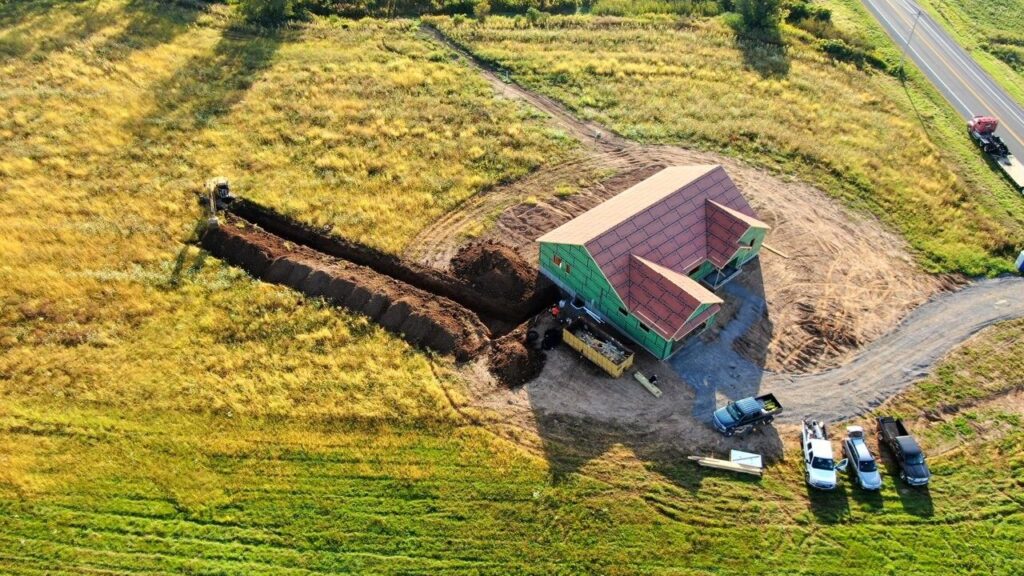
A horizontal loop is installed in trenches, usually 4–8 feet deep.
This option works well when:
- There’s plenty of open land
- Excavation costs are lower than drilling
- New construction is already planned
Horizontal systems require more surface area but are very effective when space allows.
Heat Exchange
Heat exchange is the core concept behind geothermal.
- In winter, heat moves from the earth into your home
- In summer, heat moves from your home back into the earth
The ground stays relatively constant year-round, which is why geothermal systems don’t struggle during extreme weather.
Coefficient of Performance (COP)
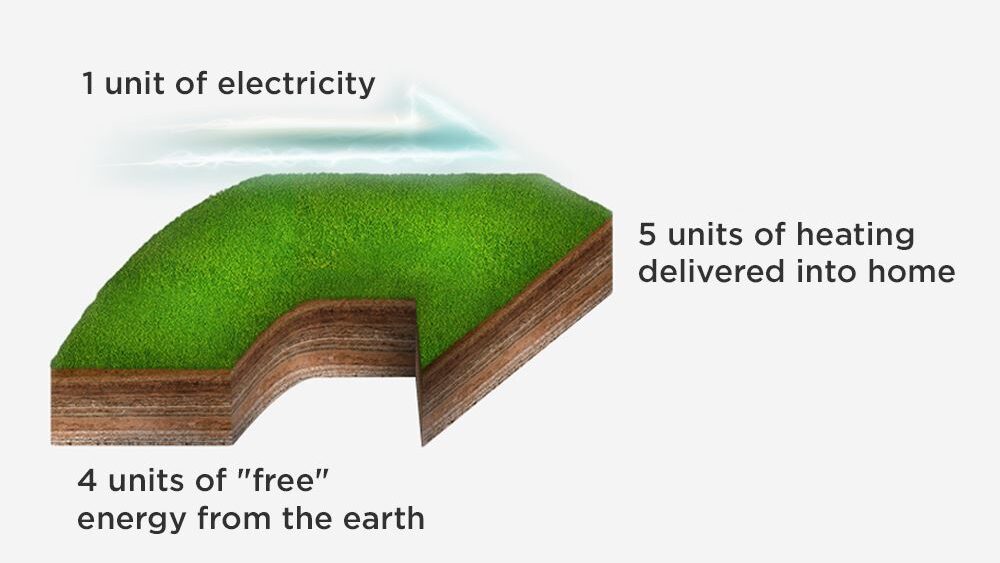
COP is a measure of heating efficiency.
For example: A COP of 4.0 means…
- For every one unit of electricity used, the system delivers four units of heat
Geothermal systems routinely achieve COPs that are far higher than conventional heating equipment.
Energy Efficiency Ratio (EER)
EER measures cooling efficiency.
The higher the EER, the less electricity the system uses to cool your space. Geothermal heat pumps often outperform even the highest-efficiency air conditioners because they reject heat into cool ground instead of hot outdoor air.
Desuperheater
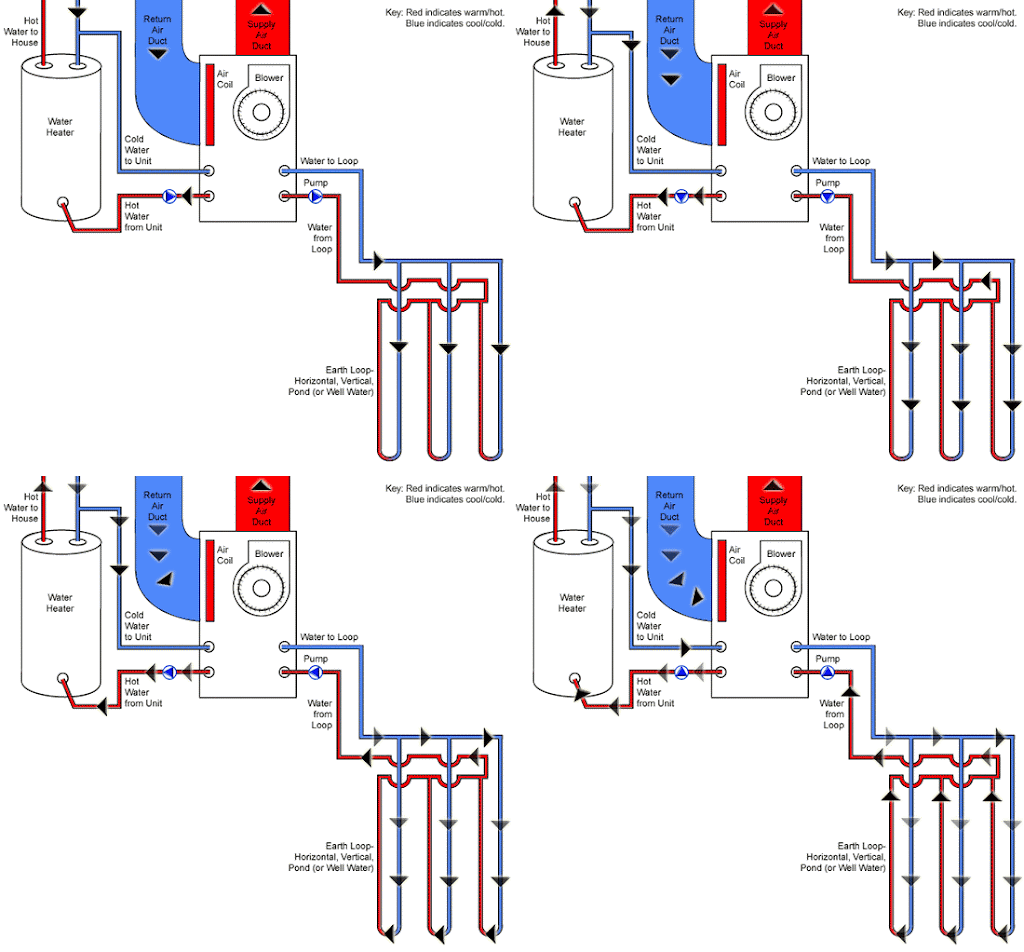
A desuperheater is an optional add-on that uses excess heat from your compressor to pre-heat your domestic hot water.
In practical terms:
- It can reduce water heating costs
- It’s especially effective during summer cooling season
It’s one of those small upgrades that can deliver big long-term savings.
Load Calculation
A load calculation determines how much heating and cooling your building actually needs. This is also known as a Manual J calculation.
This isn’t guesswork. We evaluate:
- Square footage
- Insulation levels
- Windows/Door
- Occupancy
- Climate
Proper sizing is critical. A well-designed geothermal system should run steadily and efficiently, not constantly cycle on and off.
Why This Terminology Matters
Understanding these terms helps you:
- Ask better questions
- Compare proposals accurately
- Feel confident in your investment
Geothermal systems are built to last, so it’s worth knowing what’s going into the design.
If you ever hear a term that doesn’t make sense, that’s on us, not you. A good geothermal installer should be able to explain every part of the system in plain language!
And if you’re ready to talk about what geothermal could look like on your property, we’re always happy to translate.

COMMENTS