

What Is a Manual J Heat Load Calculation—and Why It Matters for Geothermal
When it comes to designing a residential high-performance heating and cooling system, nothing should be left to guesswork. That’s where a Manual J heat load calculation comes in. It’s the foundation for proper system sizing—and for geothermal projects, it’s absolutely critical.
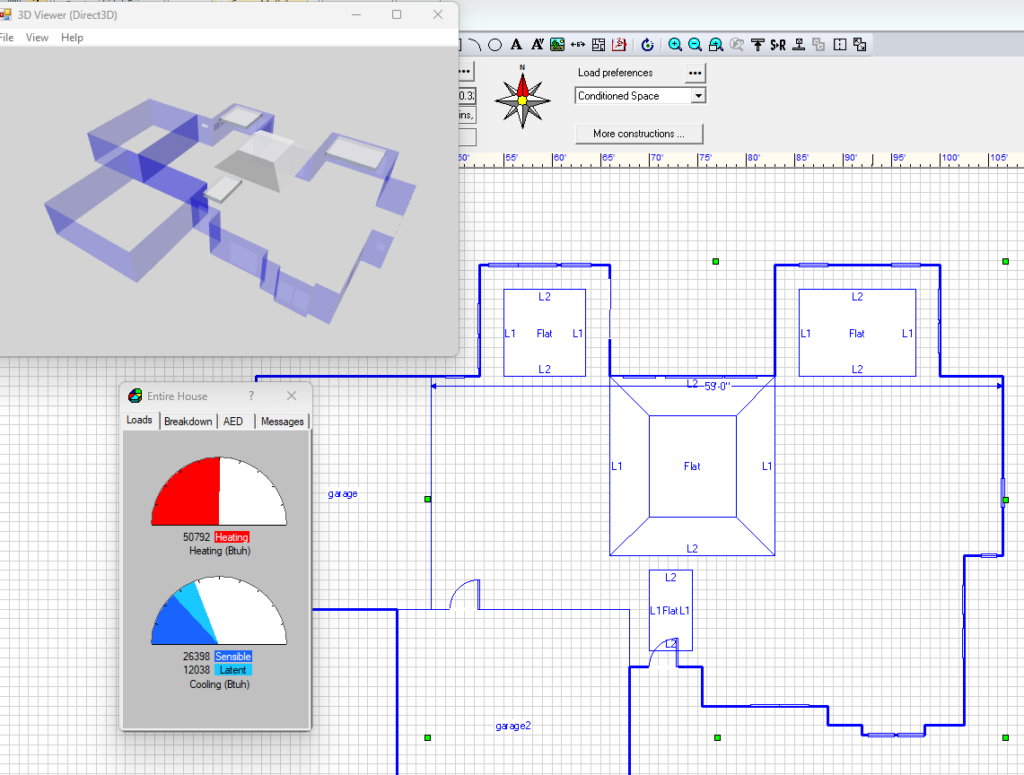
This modeling allows us to visualize a home’s size and specify varying build characteristics (doors, windows, ceiling heights) that impact a manual J calculation.
What Is a Manual J Calculation?
A Manual J calculation is the industry-standard method (developed by ACCA) used to determine how much heating and cooling a home actually needs.
Instead of relying on rough rules of thumb (like square footage), Manual J looks at the real characteristics of your home, including:
- Insulation levels in walls, ceilings, and floors
- Window size, type, and orientation
- Air leakage and infiltration
- Local climate conditions
- Home layout and ceiling heights
- Internal heat gains (people, appliances, lighting)
- Engineered ventilation systems (ERV/HRV)
- Humidification and dehumidification systems
- Fireplaces
- Overhangs
- House Orientation
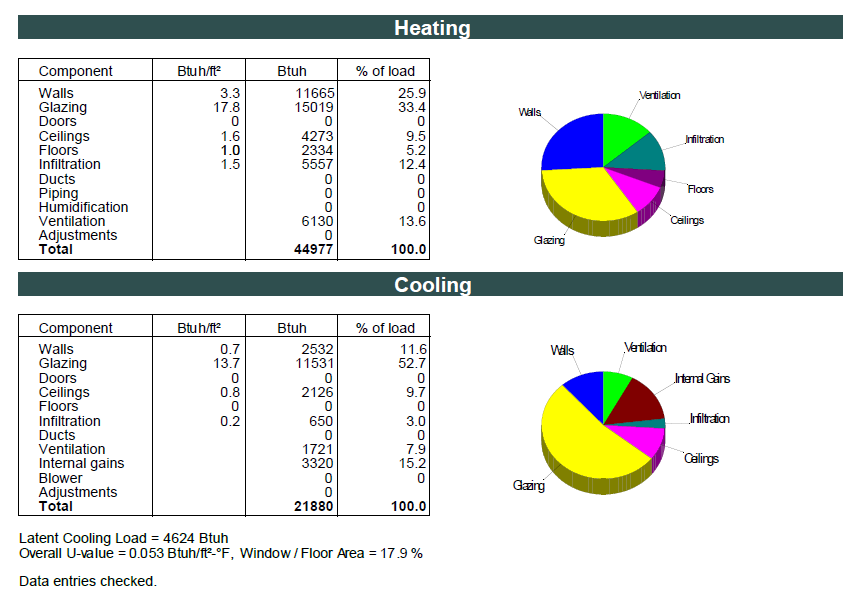
The result is a precise measurement of:
- Heating load (BTUs required in winter)
- Cooling load (BTUs required in summer)
Why Is a Manual J So Important?
A properly performed Manual J isn’t just a technical exercise, it directly impacts your comfort, efficiency, and long-term costs.
If a system is oversized:
- It short cycles (turns on and off too frequently)
- Reduces efficiency and increases wear
- Creates uneven temperatures and poor humidity control
If a system is undersized:
- It struggles to keep up in extreme weather
- Runs constantly, increasing energy use
- Leaves you uncomfortable when you need it most
In short: Guessing costs money, both upfront and over the life of the system.
Why Manual J Is Critical for Geothermal Projects
With conventional HVAC systems, oversizing can sometimes be masked (though still inefficient). But with geothermal, sizing mistakes are amplified because the system is tied directly to the ground loop field.
A geothermal system has two major components that must be perfectly matched:
- The heat pump inside the home
- The ground loop outside
If the load calculation is off:
- The loop field may be too small → reduced efficiency over time
- The system may rely on backup heat more than expected
- You lose the long-term performance geothermal is known for
That’s why accurate load calculations are non-negotiable in geothermal design.
How We Integrate a Manual J Into Our Geothermal Process
We don’t treat Manual J as a checkbox, we use it as the backbone of your entire system design.
Here’s how it fits into our process:
1. Detailed Home Assessment
We gather real data about your home. This includes construction details, insulation, windows, and layout. When your project manager asks if you’ve done any upgrades to your home’s efficiency (air sealing, insulation, etc.) this is a part of the manual J process.
2. Manual J Load Calculation
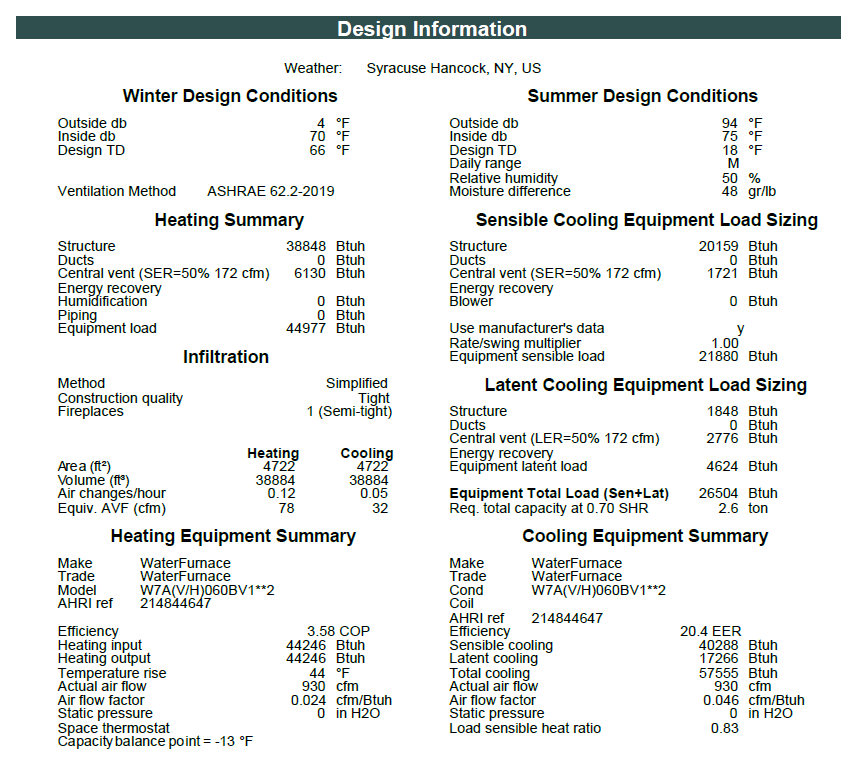
We run a full, professionally engineered Manual J to determine exact heating and cooling requirements. There are different programs available for use, but our team uses Wrightsoft.
3. System Selection
Using that data, we select the properly sized geothermal heat pump.
4. Loop Field Design
This is where geothermal gets specialized. We use the Manual J results to engineer the ground loop.
Everything is matched to your home’s actual energy demand.
5. Performance Verification
Before installation, we confirm that:
- The system capacity aligns with the load
- The loop field can sustain long-term efficiency
- The design meets both comfort and energy goals
The Bottom Line
A geothermal system is one of the most efficient and long-lasting investments you can make in your home, but only if it’s designed correctly from the start.
The Manual J calculation ensures:
- Comfort in every season
- Maximum efficiency
- Proper system longevity
- Confidence that your investment is right-sized
If you’re considering geothermal, don’t settle for rules of thumb. Start with the data, design it right, and let the system do what it’s built to do: Deliver quiet, consistent, and powerful comfort from the ground up.

COMMENTS