

Understanding How Geothermal Systems Use Electricity, and What It Means for Your Monthly Energy Costs
If you’re considering a geothermal heat pump for your home, chances are you’ve heard two things:
- Geothermal systems are incredibly efficient.
- They run on electricity.
That second point naturally raises a fair question: “If it runs on electricity, won’t my electric bill skyrocket?”
It’s a smart concern, and exactly the kind of question you should be asking before investing in a new heating and cooling system. Let’s walk through how geothermal systems use electricity, how that compares to traditional systems, and what really changes in your monthly energy costs.
First, How Does a Geothermal Heat Pump Work?
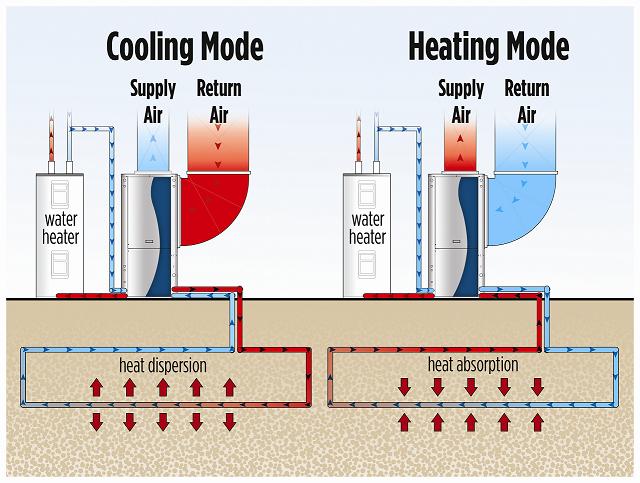
A geothermal heat pump (also called a ground-source heat pump) doesn’t create heat by burning fuel. Instead, it moves heat.
Think of it like a refrigerator in reverse:
- In winter, it pulls heat from the ground and moves it into your home.
- In summer, it removes heat from your home and transfers it back into the ground.
The earth a few feet below the surface stays at a relatively constant temperature year-round. That stable temperature is what makes geothermal so efficient.
So yes, it uses electricity.
But here’s the key: A geothermal system uses electricity to run components, not to generate heat directly.
The electricity powers:
- The compressor
- The circulation pumps
- The blower fan
- The control system
What it does not do is burn:
- Fuel oil
- Propane
- Natural gas
That’s a major shift.
Understanding the Energy Shift
If you currently heat with oil or propane, your winter energy spending probably looks something like this:
- $300–$800/month on fuel deliveries during peak winter
- Smaller electric bills for lights and appliances
With geothermal, that structure changes.
You might see:
- No more fuel deliveries
- No oil tank
- No propane contract
- A higher electric bill during heating season
But the total monthly energy spending is often equal to or lower than before, because geothermal systems are extremely efficient.
Why Efficiency Changes Everything
Traditional heating systems burn fuel to create heat. Even the best furnace is typically 85–95% efficient.
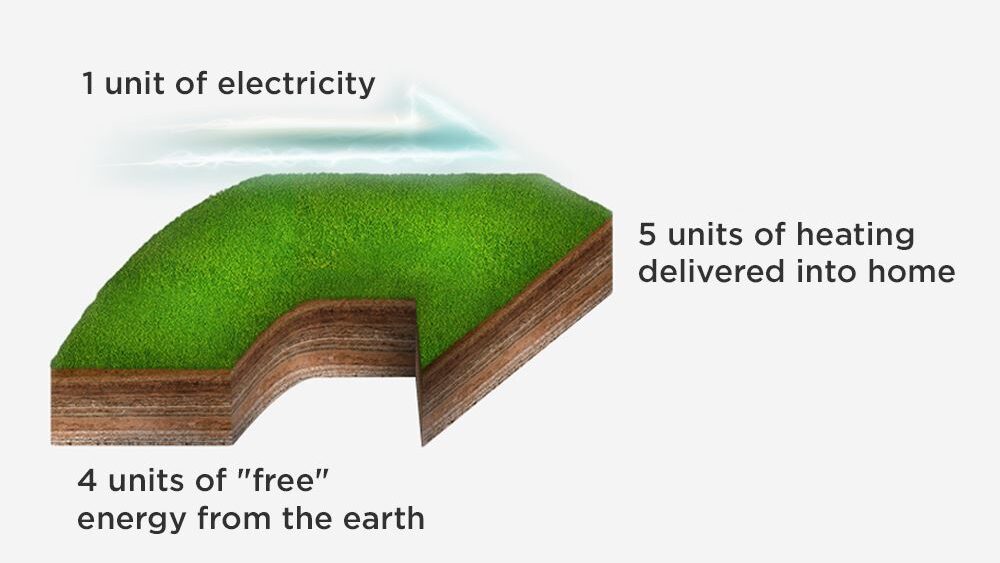
A geothermal heat pump, by comparison, can deliver 3–5 units of heat for every 1 unit of electricity used.
That’s not magic, it’s because it’s moving heat instead of making it. In efficiency terms, that’s 300–500% effective performance.
So while you are using electricity, you’re using much less energy overall to heat your home.
How Geothermal Heat Pumps Move Energy
Step 1: Heat is absorbed from the earth
A buried (closed loop) ground loop circulates a water-antifreeze mixture through the stable underground temperature. As it moves through the earth, the fluid absorbs stored heat from the soil.
Step 2: Heat transfers to the refrigerant
The warmed water returns to the indoor geothermal unit and passes through a heat exchanger. Inside this exchanger, heat moves from the water into a refrigerant. The water then cycles back underground to collect more heat.
Step 3: The compressor concentrates the heat
The refrigerant, now carrying heat, enters the compressor. The compressor squeezes the refrigerant into a high-pressure gas, dramatically increasing its temperature; this is what makes the heat warm enough to comfortably heat your home.
Step 4: Heat moves into your home’s air
The hot refrigerant flows through a second heat exchanger called the condenser coil (inside the fan coil unit). A blower fan moves household air across this warm coil, and the air absorbs the heat.
Step 5: Warm air is distributed through the home
The heated air travels through your ductwork and into your living spaces, maintaining consistent indoor comfort.
Step 6: The cycle repeats
After releasing its heat, the refrigerant cools, passes through an expansion device to lower its pressure and temperature, and returns to collect more heat from the ground loop, continuing the cycle efficiently without burning any fuel.
To cool, the process is reversed.
What Happens to Your Utility Bills?
Let’s simplify with an example.
Before Geothermal:
- $500/month average winter propane bill
- $150/month electric bill
- Total: $650/month
After Geothermal:
- $350–$450/month electric bill
- $0 propane bill
- Total: $250-$300 Monthly Savings
Your electric bill rises, but your fuel bill disappears.
Instead of paying for truck deliveries of combustible fuel, you’re paying for electricity to operate a highly efficient heat-moving system.
What About Summer?
Here’s another advantage homeowners appreciate:
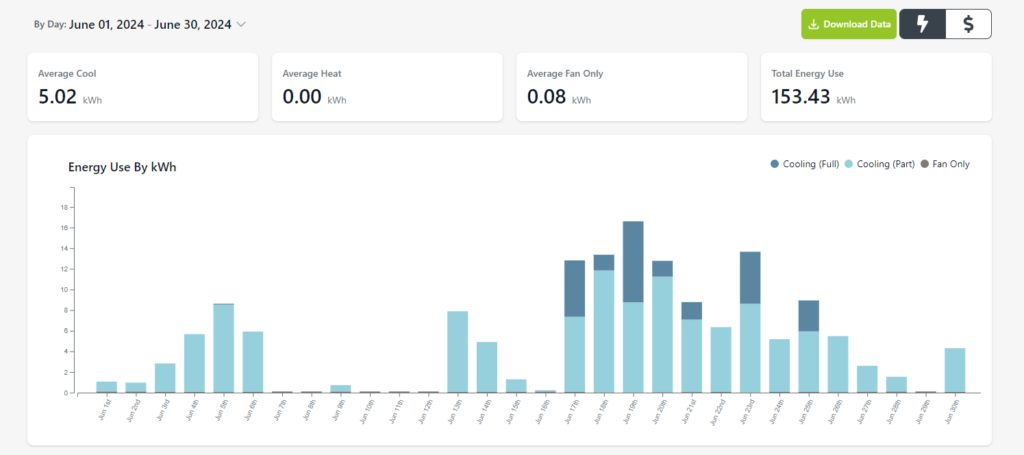
Geothermal systems are also high-efficiency air conditioners.
Because they use the stable ground temperature rather than hot outdoor air to reject heat, they cool more efficiently than conventional AC systems.
So you may see:
- Lower summer cooling costs
- More consistent indoor comfort
- Less strain on equipment
A Bigger Picture: Energy Source Shift
When you install geothermal, you’re not just upgrading equipment, you’re changing where your energy comes from.
Instead of relying on fossil fuels delivered to your property, your system runs on electricity. That electricity can come from:
- The local grid
- Renewable sources on the grid
- Your own solar panels
This means your home heating can become:
- Lower-carbon
- More stable in long-term cost
- Less vulnerable to fuel price spikes
Many homeowners appreciate the predictability. Electricity rates do fluctuate, but they’re typically more stable than oil or propane pricing.
Does Geothermal Use “A Lot” of Electricity?
It uses more electricity than a furnace, yes. But it uses far less total energy than fossil-fuel heating.
The real question isn’t: “Does it use a lot of electricity?”
The better question is: “Does it reduce my total energy usage and fossil fuel dependence?”
For most properly sized and installed systems, the answer is yes.
What Determines Your Actual Usage?
Every home is different. Electricity consumption depends on:
- Home size
- Insulation levels
- Climate
- Thermostat settings
- System design quality
- Loop field sizing
A properly designed geothermal system is critical. Oversizing or undersizing affects efficiency and performance. That’s why professional load calculations and site evaluations matter.
A Practical Way to Think About It
If you’re trying to visualize the change, think of it like this:
Before Geothermal:
- You own a heating system that burns fuel.
- You pay for that fuel continuously.
- Efficiency is limited by combustion.
After Geothermal:
- You own a system that taps into steady underground temperatures.
- You power it with electricity.
- No flame. No exhaust. No fuel tank.
- Heat is transferred, not created.
It’s less about using more electricity, and more about using energy smarter.
Final Thoughts: Making an Informed Decision
If you’re considering geothermal, asking about electricity use is exactly the right instinct. You should understand:
- Where your energy is coming from
- How your bills will change
- What long-term operating costs look like
The biggest takeaway?
Geothermal doesn’t eliminate energy use, it replaces fossil fuel consumption with highly efficient electric operation.
For many homeowners, that means:
- Lower total energy bills
- Greater comfort
- Reduced environmental impact
- Freedom from fuel deliveries

COMMENTS